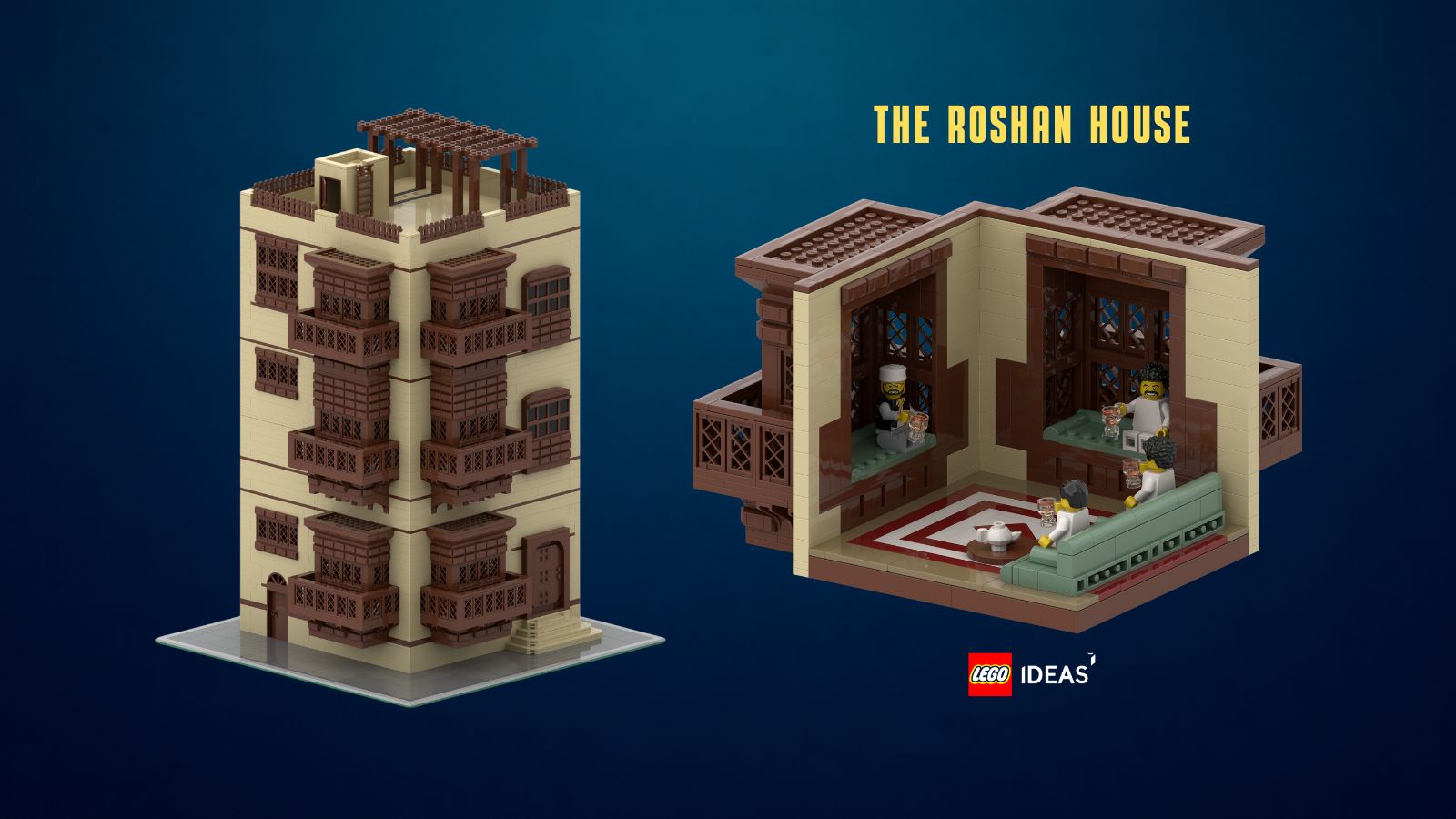
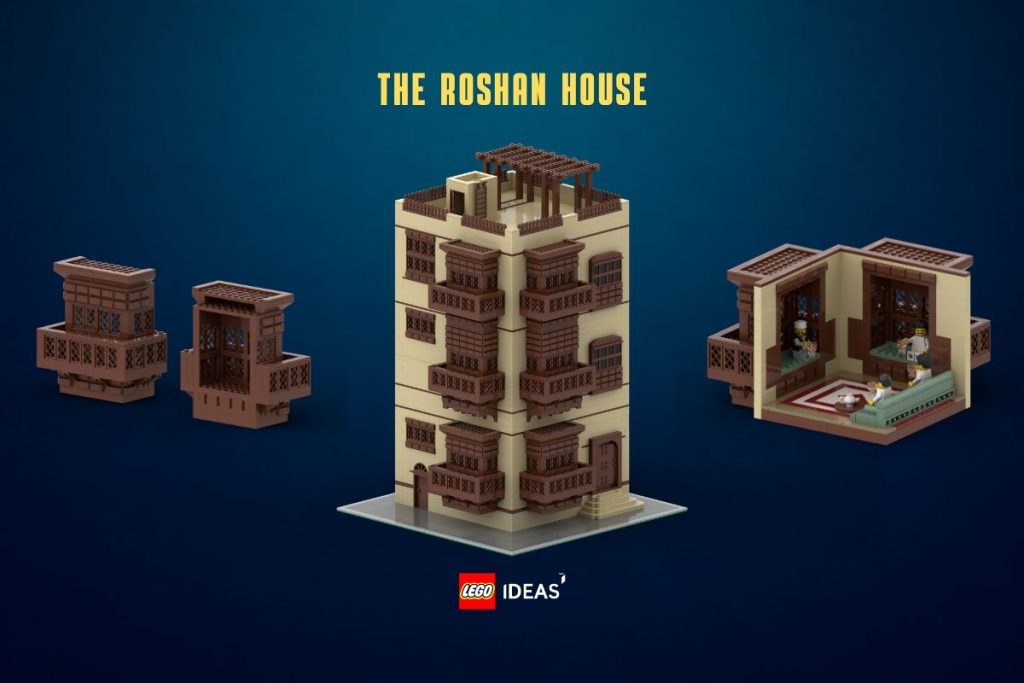
For the past several months, I have been working on a LEGO Ideas project called The Roshan House — a model inspired by the traditional Roshan houses found throughout Al-Balad in Jeddah.
What began as admiration for the architecture of old Jeddah gradually became something much more personal. The more I studied these buildings, the more fascinated I became by how they combined beauty, climate adaptation, craftsmanship, and everyday life into a single architectural language.
When I started building this project, my goal was never simply to recreate a historic building in LEGO form.
What interested me most was the challenge of translation.
How do you translate the atmosphere of Al-Balad into LEGO bricks?
How do you recreate the feeling of walking through the narrow historic streets of old Jeddah using a system built from geometric plastic elements?
And how do you preserve the identity of Hijazi architecture while still making the model feel unmistakably LEGO?
Those questions became the foundation of The Roshan House.
Discovering the Architecture of Al-Balad
Like many people living in Jeddah, I had passed by the historic houses of Al-Balad countless times over the years. I always knew they were important, but I never fully understood how extraordinary they truly were until I began paying closer attention to the details.
The more I learned, the more fascinated I became.
The projecting wooden Roshan windows. The carved latticework. The coral stone walls. The narrow alleyways designed to create shade and airflow. The layered façades shaped by centuries of craftsmanship and coastal climate.
What impressed me most was that these buildings were not only visually beautiful — they were highly functional.
The Roshan windows, for example, were designed to allow ventilation and natural cooling while also maintaining privacy for the families inside. Long before air conditioning existed, these houses already contained intelligent environmental solutions adapted specifically to Jeddah’s hot and humid climate.
To me, that represents one of the most remarkable aspects of traditional Hijazi architecture: beauty and function are inseparable.
The importance of Historic Jeddah extends far beyond architecture alone. In 2014, Historic Jeddah was inscribed as a UNESCO World Heritage Site because of its cultural and historical significance as a gateway city for pilgrims traveling to Makkah and as a major trading port along the Red Sea.
UNESCO recognized the district for several key reasons, including:
- its unique urban and architectural traditions of the Red Sea region
- its role as an important multicultural trading center
- its historical significance connected to pilgrimage routes
- its preservation of traditional coral-stone houses and Roshan architecture
- its representation of cultural exchange between Africa, the Arab world, and Asia over many centuries
Learning more about this history made me appreciate the district even more, especially how architecture can reflect movement, trade, religion, climate, and everyday life all at once.
Looking at Heritage Through a LEGO Builder’s Perspective
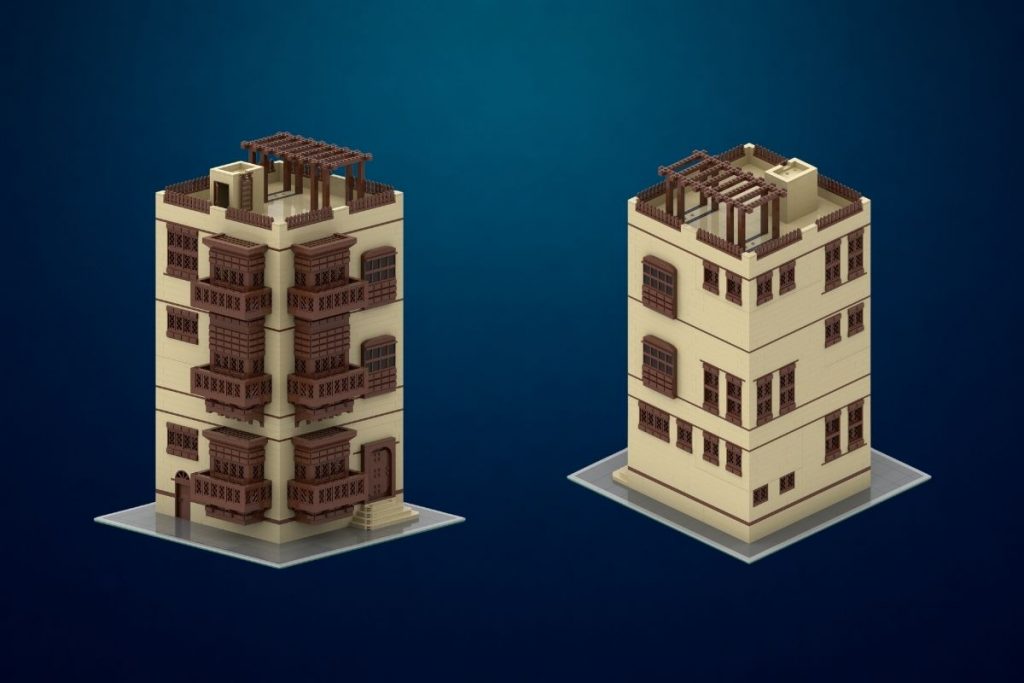
As I began studying the architecture more closely, I also started looking at it through the perspective of a LEGO builder.
Not only:
“How was this building constructed?”
But also:
“How can these forms exist within the LEGO system?”
That became the real creative challenge.
Traditional Roshan houses contain depth, asymmetry, carved wood details, weathered textures, and irregular surfaces — qualities that are difficult to reproduce using the clean geometry of LEGO bricks.
Every section of the build required balancing:
- architectural authenticity
- LEGO stability
- realistic proportions
- texture
- playability
- visual readability
In many ways, designing this project felt similar to translating a language. Some architectural details could be recreated directly, while others needed reinterpretation to work effectively within LEGO form.
Recreating the Roshan Windows
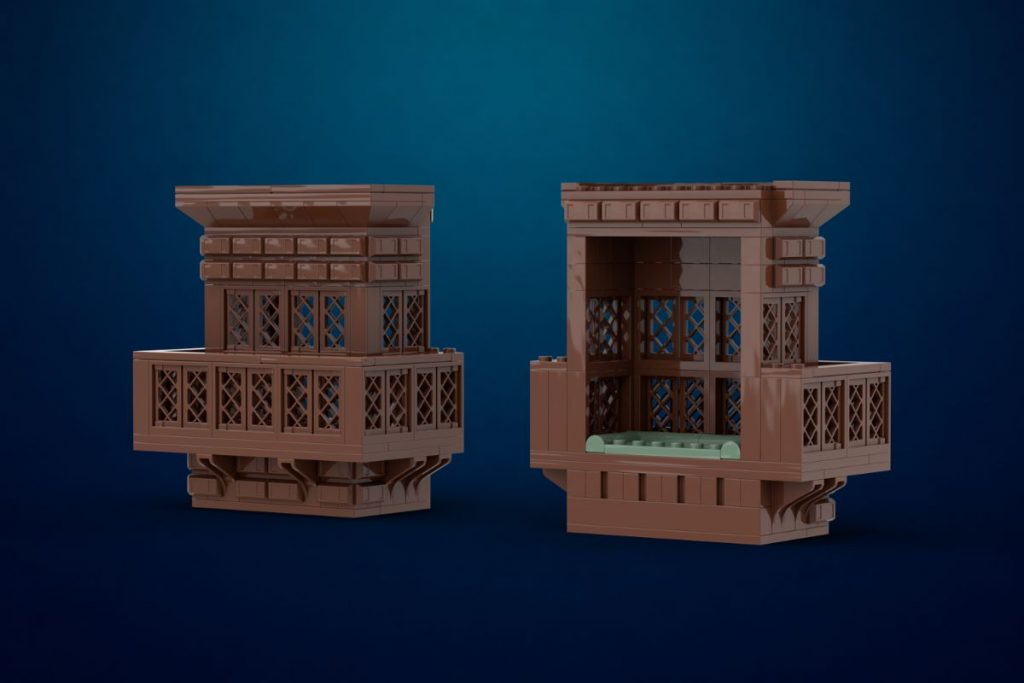
The Roshan windows became the centerpiece of the entire model and one of the most technically challenging aspects of the build.
These windows are among the most recognizable features of Hijazi architecture. They project outward from the building façade and contain intricate wooden patterns that filter light and air into the home.
I spent a significant amount of time experimenting with different LEGO techniques to capture:
- layered depth
- wooden framing
- ventilation patterns
- repetition and rhythm
- vertical proportions
- shadow and texture
The challenge was not simply making the windows detailed. They also needed to remain structurally stable and believable as LEGO elements.
Several sections were redesigned multiple times because they either appeared too flat, too modern, or too fragile.
Eventually, I realized that the goal was not exact replication. The goal was preserving the architectural character and atmosphere of the Roshan windows within the visual language of LEGO.
Translating Atmosphere Instead of Copying a Single Building
One important thing I want to clarify is that The Roshan House is not an exact replica of one real building in Al-Balad.
Instead, it is a LEGO interpretation inspired by the architectural identity of traditional Hijazi homes as a whole.
I combined details and inspirations from multiple heritage houses:
- Roshan window styles
- façade compositions
- rooftop structures
- interior stair layouts
- alleyway proportions
- wooden details
- traditional color palettes
My focus was always on atmosphere.
I wanted the model to immediately feel connected to old Jeddah even if it was not based on one identifiable structure.
The warm colors, layered façades, narrow proportions, and vertical rhythm were all designed to capture the feeling of walking through Al-Balad rather than documenting a specific building.
Designing the Interior Spaces
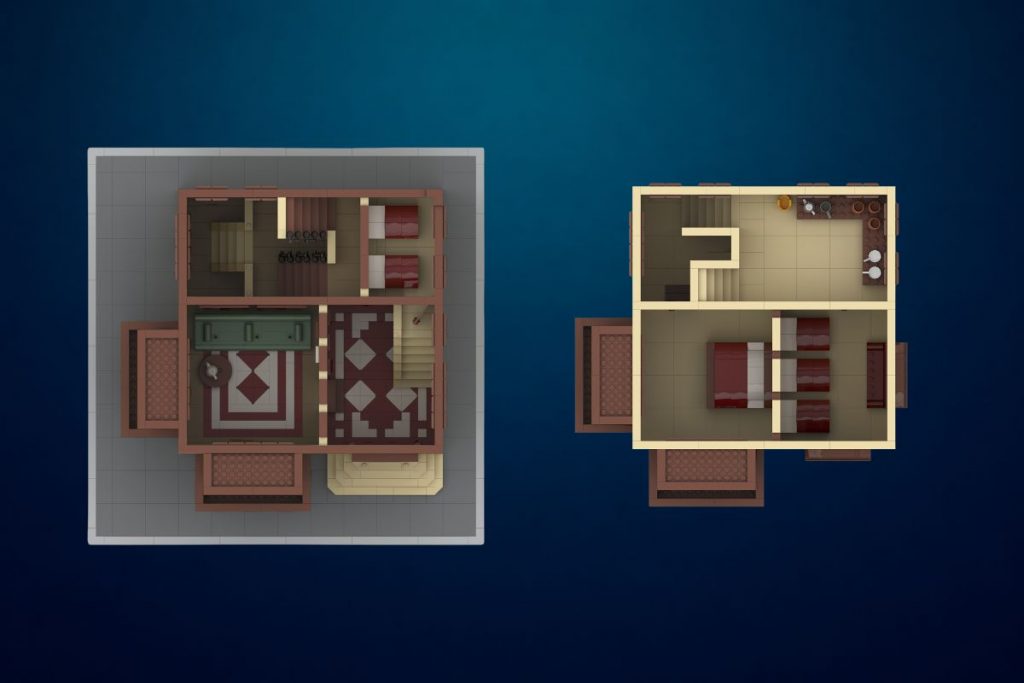
From the beginning, I also wanted the interior to feel just as important as the exterior.
Many heritage-inspired LEGO models focus mainly on the façade, but I wanted this house to feel alive.
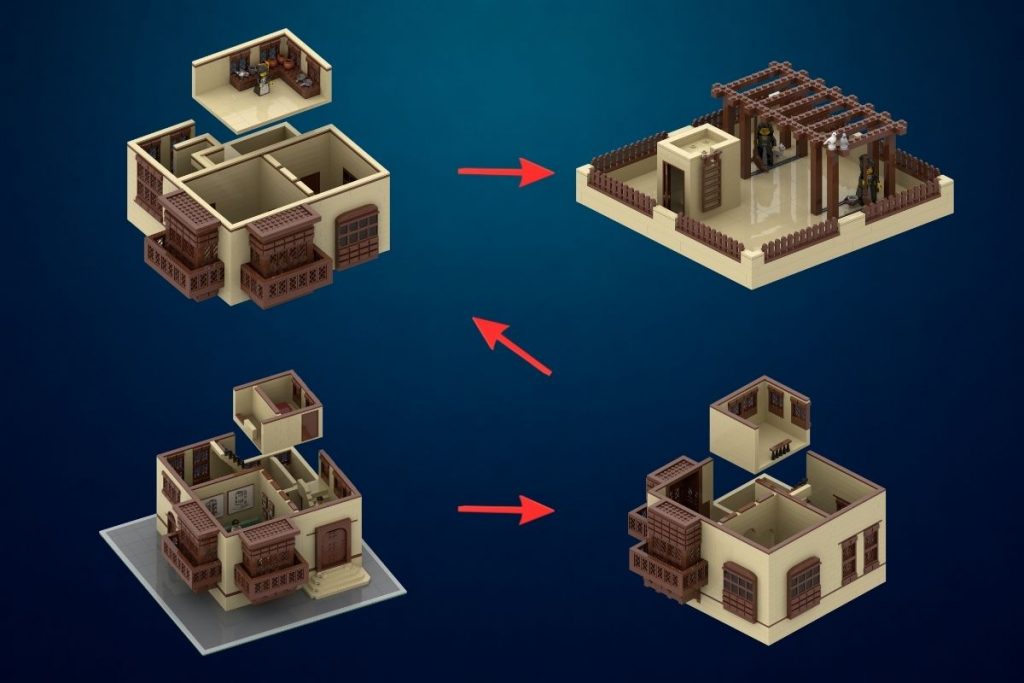
That is why each floor of the model is detachable and reveals interior scenes inspired by traditional Hijazi homes.
Some of the interior arrangements were influenced by guided visits inside heritage houses in Al-Balad. Seeing the interiors in person helped me better understand how these homes functioned as living spaces rather than simply historic landmarks.
I tried to carry that atmosphere into the model through:
- intimate room layouts
- narrow staircases
- rooftop gathering spaces
- layered vertical circulation
- warm interior colors
- small domestic details
I wanted the building to feel inhabited rather than museum-like.
The detachable floors also allowed the project to become more narrative. Each level reveals another part of the house and another layer of daily life inspired by traditional homes in old Jeddah.
Working Within LEGO Limitations
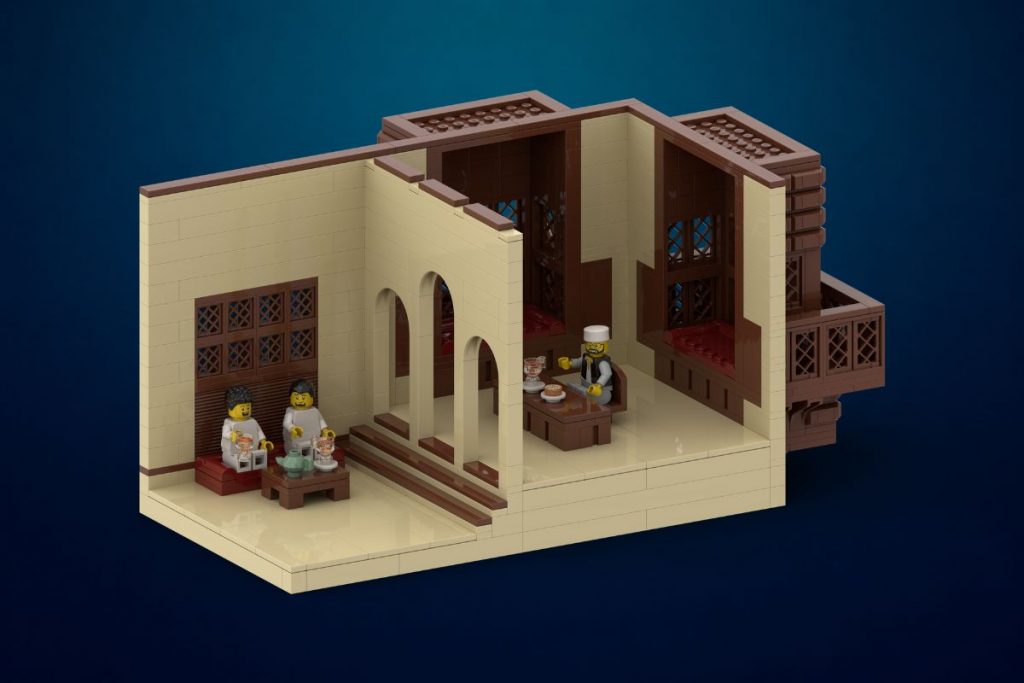
One of the most rewarding parts of this project was discovering how LEGO limitations can actually encourage creativity.
Many architectural details in Al-Balad are organic, weathered, and imperfect. LEGO pieces, by contrast, are precise and geometric.
That contrast forced me to rethink how heritage architecture could be represented.
Sometimes an accurate architectural recreation did not look correct in LEGO form. Other times, a simplified interpretation captured the spirit of the original structure much better.
Color selection was another major challenge.
The buildings of Al-Balad contain warm earthy tones shaped by coral stone, humidity, sunlight, wood, and age. Recreating that atmosphere using the LEGO color palette required constant experimentation.
I wanted the model to feel warm, historic, and sunlit without becoming visually repetitive.
Why LEGO?
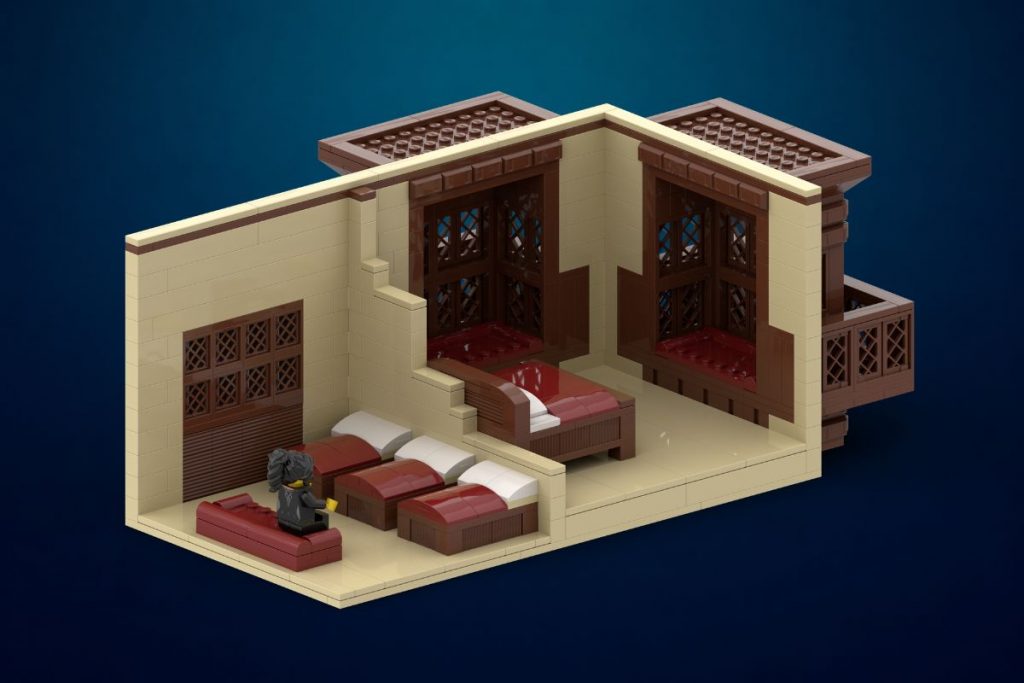
Many people have asked why I chose LEGO as the medium for this project.
For me, LEGO is more than a toy. It is a universal creative language.
A LEGO model can introduce architecture, history, and culture to audiences who may never have encountered these subjects before. Through LEGO, people from different parts of the world can engage with unfamiliar places in a way that feels approachable and interactive.
I began wondering:
What if someone who has never heard of Hijazi architecture discovers it through a LEGO set?
That idea became one of the strongest motivations behind this project.
I believe Saudi heritage architecture deserves greater representation within global creative spaces. When people think about architecture in LEGO form, they often imagine castles, skyscrapers, or famous international landmarks. But the architecture of Al-Balad is equally rich in identity, history, and visual character.
Through The Roshan House, I hope more people around the world become curious about:
- Hijazi architecture
- Al-Balad
- traditional Saudi urban design
- heritage conservation
- Red Sea architecture
- the stories connected to these historic homes
A Personal Inspiration
Long before this project, one of my favorite books was The Architect’s Apprentice by Elif Shafak.
One line from the book always stayed with me:
“Forza, utilità, bellezza.”
Strength, function, beauty.
Whenever I look at the traditional houses of Al-Balad, I think about that idea. Their beauty is inseparable from their functionality. The Roshan windows, shaded alleyways, ventilation systems, and layered living spaces were all designed with purpose.
That balance between practicality and beauty is one of the things I admire most about Hijazi architecture, and something I hoped to reflect in LEGO form.
More Than a LEGO Build
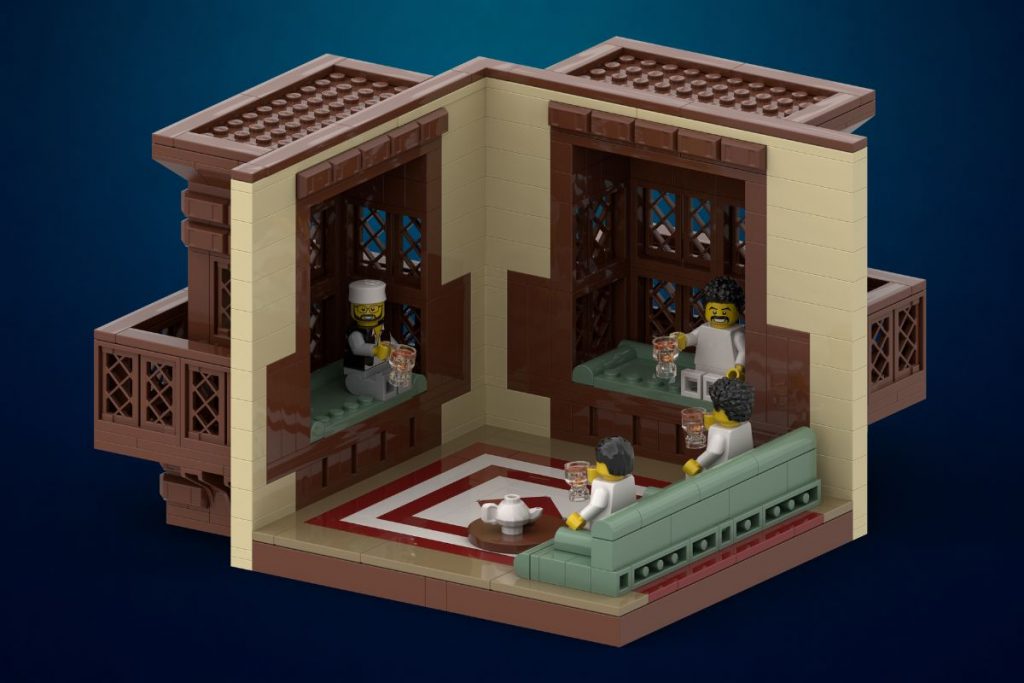
Over time, this project became more than just a creative exercise.
It became a way for me to connect more deeply with the architectural identity of Jeddah and to contribute, in my own way, to conversations about heritage preservation and cultural storytelling.
Historic buildings are not simply old structures. They are records of how people lived, adapted to climate, built communities, and expressed craftsmanship through architecture.
That is what I hope The Roshan House can communicate.
Not only through its exterior appearance, but through the process of translating heritage into LEGO brick form.
Looking Ahead
This is only the beginning of the journey for The Roshan House.
In future blog posts, I plan to share:
- early prototypes and failed versions
- behind-the-scenes building techniques
- Roshan window experiments
- interior design decisions
- color studies
- architectural inspirations from Al-Balad
- structural LEGO solutions
- updates from the LEGO Ideas campaign
Thank you to everyone who has supported the project so far and helped share it with others.
I truly appreciate every comment, message, and vote of support, and I look forward to continuing this journey of translating Saudi heritage architecture into LEGO.
If you would like to help bring Saudi heritage architecture to the LEGO Ideas platform, you can support The Roshan House by voting on the LEGO Ideas page and sharing the project with others who appreciate history, architecture, and creative design.
Each vote contributes to preserving and celebrating architectural history through creativity and storytelling.
If you haven’t yet, CLICK HERE TO VOTE!
Be First to Comment